

 Get Solution Of Your Problem Anytime From Anywhere










Beyond Spells and Manipulation: The True Heritage of the “Love Mantra Extremely Powerful”
Search the internet for a love mantra extremely powerful and you will be met with a deluge of promises: instant reunion with an ex-partner within twenty-four hours, absolute control over another person’s thoughts, or supernatural spells capable of bending free will. Marketed heavily by commercial agencies operating under the guise of traditional Jyotish or Tantra, these claims reduce millennia-old sound practices into transactional mechanisms of coercion.
In authentic Indian spiritual heritage—encompassing classical Mantra Shastra, classical Tantra, and Vedic scriptural traditions—an extremely powerful love mantra does not function as a weapon of domination. Traditional texts view sound as an acoustic instrument of internal transformation. Rather than forcing an external individual into compliance, authentic formulas associated with love, attraction (akarshana), and emotional union are designed to purify the practitioner’s mind, stabilize volatile emotions, and cultivate personal radiance.
- What Makes a Sound “Powerful”? The Acoustics of Attraction in Tantra
In the classical philosophy of Mantra Shastra, a mantra is not a magical invocation designed to alter external events by magic. It is defined etymologically by the phrase Mananat trayate iti mantrah—”that which protects through the recollection and transformation of the mind.” Sound (Shabda) is understood as a fundamental vibration that structures human consciousness and subtle energy (Prana).
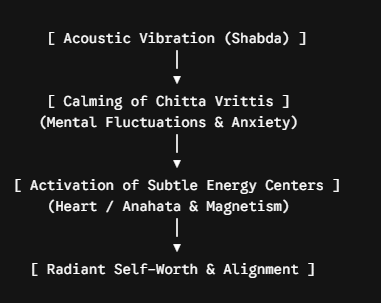
When classical manuals describe a love mantra extremely powerful, the “power” refers to its capacity to alter the internal state of the practitioner.
The Seed Syllable Kleem
Among the primary acoustic components of attraction mantras, the monosyllabic seed sound (bija) Kleem (क्लीं) holds central importance. In Tantric compendiums such as the Sharadatilaka Tantra and Mantra Mahodadhi, Kleem is cataloged as the Kama Bija—the fundamental sound frequency of desire, cohesion, and divine love.
Ka (क्): Represents Kamadeva (the archetype of desire) or Krishna (the embodiment of divine attraction).
La (ल्): Symbolizes the earth element, grounding the vibration in tangible reality.
Ee (ी): Associated with the subtle energy of the Divine Feminine (Trikona or Yoni Shakti), bringing vitality and warmth.
M (ं): The nasalized Anusvara, representing the transcendence of individual ego into pure awareness.
Rather than acting as a hypnotic spell aimed at an unsuspecting third party, the rhythmic repetition (japa) of Kleem acts on the practitioner’s own energy field. It settles chaotic thoughts (chitta vrittis), opens the heart center (Anahata Chakra), and builds self-assurance.
- Classical Mantras for Affection, Harmony, and Union
Scriptural traditions offer several distinct mantras for matters of the heart, each serving a specific spiritual and emotional purpose.
The Kamadeva Gayatri Mantra
Kamadeva represents the cosmic force of desire, aesthetic beauty, and attraction, while his consort Rati represents emotional attachment and delight. The Kamadeva Gayatri is traditionally chanted to invoke grace, aesthetic harmony, and mutual attraction between partners:
Om Kamadevaya Vidmahe Pushpabanaya Dhimahi Tanno Anangah Prachodayat
Translation: “Om, let us meditate on Kamadeva, the bearer of the floral arrows. May Ananga [the formless god of love] inspire and illuminate our mind.”
By focusing on the formless aspect of love (Ananga), the mantra encourages the practitioner to embody the qualities of attraction—warmth, appreciation of beauty, and emotional openness—rather than acting out of desperate attachment.
The Katyayani Mantra: Seeking a Harmonious Partner
In the Srimad Bhagavatam (10th Canto, Chapter 22), the young maidens of Braj (Gopis) undertake a sacred vow (Katyayani Vrata) to seek Lord Krishna as their husband. They invoke Goddess Katyayani, an avatar of Durga representing protective maternal grace and righteous fulfillment:
Katyayani Mahamaye Mahayoginyadhisvari / Nanda-gopa-sutam Devi Pati Me Kuru Te Namah
Translation: “O Goddess Katyayani, great cosmic illusion, possessor of supreme mystic power, please make the son of Nanda my life partner. I offer my reverent obeisances unto you.”
Scripturally, this mantra is framed as an act of prayer and surrender (prapatti). The practitioners do not attempt to manipulate Krishna; instead, they refine their own discipline and ask the divine order (Dharma) to grant a compatible, righteous union.
- Demystifying Vashikaran: Myth vs. Philosophical Reality
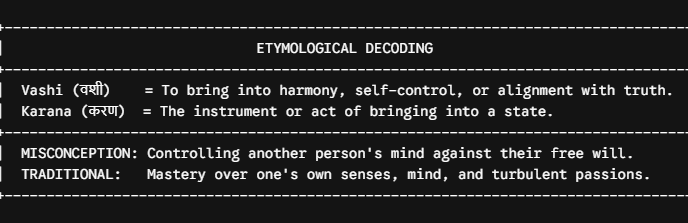
The word most frequently abused in modern relationship marketing is Vashikaran (वशीकरण). Internet agencies routinely sell “Vashikaran rituals” with promises of absolute subjugation. To evaluate these claims, one must examine the term’s classical roots.
Historical Context in the Shatkarma
In specialized Tantric manuals such as the Uddisha Tantra and Sharadatilaka, Vashikaran is categorized under the Shatkarma (six specialized ritual actions: Shanti, Vashikaran, Stambhana, Vidveshana, Uchhatana, and Marana). Historical scholars and authentic practitioners emphasize several critical points regarding these texts:
Prerequisites of Initiation: These techniques were written in coded language (Sandhya Bhasha) for initiated ascetics under strict monastic discipline (guru-shishya parampara), never as quick DIY remedies for the public.
Internal Governance: The primary target of control (Vashi) in classical spiritual manuals is the practitioner’s own internal nature—specifically the five senses (Indriya Nigraha) and the lower instincts of anger, jealousy, and obsession.
Harmonization over Domination: When applied to interpersonal relationships, authentic akarshana (attraction) aims to dissolve artificial barriers, misunderstandings, and ego conflicts between two willing individuals, restoring natural affection.
- Ethical Boundaries, Consent, and Karmic Accountability
From an ethical and karmic perspective, attempting to use spiritual rituals to force an unwilling individual into a relationship violates the foundational principles of Indian philosophy.
Respect for Free Will and Dharma
Every individual possesses an independent soul (Jivatman) governed by its own karma and free will. Attempting to bypass a person’s explicit boundaries through coercive means—whether physical, psychological, or ritualistic—is classified in classical ethics as an act of harm (Himsa).
True love requires mutual consent, respect, and freedom. A bond formed through coercion or emotional desperation lacks a stable foundation and inevitably leads to psychological distress.
Identifying Commercial Scams
Seekers going through the grief of separation are particularly vulnerable to predatory practices. Educated seekers should remain alert to these red flags:
| Red Flag | Reality of Classical Tradition |
| Guaranteed results in 24–72 hours | Classical sadhana requires weeks, months, or years of dedicated mental discipline. No genuine tradition promises guaranteed timing. |
| Demands for large payments to “remove curses” | Traditional practitioners do not use fear-mongering, threats of black magic, or demands for exorbitant fees. |
| Secret rituals performed “on your behalf” without your participation | Spiritual development requires direct personal engagement, mental purification, and self-discipline. |
Integrating Practice Responsibly: A Practitioner’s Perspective
For those seeking to incorporate authentic Sanskrit sound traditions into their lives, practice must be anchored in emotional maturity and spiritual discipline.
Approaching Mantra as Meditative Discipline
If you choose to practice a devotional formula or the Kamadeva Gayatri, approach it as a practice of internal cultivation:
Set Clear Intentions: Shift your focus from “making X love me” to “opening my heart to give and receive authentic, healthy love.”
Focus on Pronunciation (Uchcharana): Sanskrit relies on precise resonance. Listen to traditional chants from reputable scholars or practitioners to ensure correct phrasing.
Practice Consistency over Intensity: Regular daily recitation (such as 108 repetitions using a traditional Japa Mala of sandalwood or lotus seeds) develops emotional stillness and reduces relationship-related anxiety.
Pair Tradition with Human Effort: A mantra is not a substitute for clear communication, therapy, self-reflection, and respecting another person’s boundaries.
The True Source of Power
The concept of a love mantra extremely powerful carries deep spiritual weight when stripped of commercial hype and coercive fantasies. Its power does not reside in overriding another human being’s choices or forcing a broken relationship to restart.
Instead, the true power of these ancient sound formulas lies in their ability to transform the practitioner: softening rigid self-centeredness, soothing the agony of obsessive attachment, and revealing the innate beauty, quiet dignity, and radiance of the self.