

 Get Solution Of Your Problem Anytime From Anywhere










How to Identify the Best Astrologer in Howrah
There is no single, officially accredited best astrologer in Howrah, because predictive divination in India has no statutory regulatory council. Instead, seekers navigating Howrah’s primary consultation hubs—Howrah Maidan, Shibpur, Kadamtala, Santragachi, Balitikuri, and Salkia—will encounter a diverse landscape of local practitioners and institutes. Commercial aggregators and local directories frequently surface long-standing chambers such as Dr. Sridev Shastri (M.G. Road, Howrah Maidan), Dr. Pradip Mukherjee (Howrah Maidan), Acharya Dr. Amit Sastri (Sarat Chatterjee Road, Shalimar), Dr. Krishnendu Chakraborty (Balitikuri), Dr. Abhijit Ghosal (Beldubi/Nalpur), and specialized training centers like the Rriddhi Siddhi Krishnamurthy Institute in Santragachi. Rather than relying on paid directory rankings or unverified review counts, identifying the right consultant depends on matching your specific inquiry with a practitioner’s technical methodology and ethical standards.
In the classical Indian framework, a true Daivajna or Jyotishi (astrologer) is evaluated by three strict criteria outlined in Varahamihira’s 6th-century treatise Brihat Samhita: mastery of astronomical calculation (Ganita), deep fluency in textual interpretation (Hora and Samhita), and personal integrity (Satyavadi). While modern science views astrology as a symbolic, non-empirical belief system rather than a causal science, traditional Jyotish approaches the birth chart (Janam Kundali) as a diagnostic map of Prarabdha Karma—past tendencies unfolding in the present. An authentic practitioner in Howrah uses this map to offer psychological clarity, timing counsel, and contemplative remedies, never to claim deterministic control over fate or extort money through fear.
Howrah’s Astronomical and Spiritual Heritage: What Seekers Must Know
Sitting on the western bank of the Hooghly River, Howrah shares Greater Kolkata’s intellectual history, where orthodox Sanskritic astronomy intersects with Bengal’s Shakta (Goddess-centered) Tantric traditions. To evaluate the best astrologer in Howrah for your needs, you must understand two technical distinctions that shape local practice.
The Bengal Panjika Debate: Surya Siddhanta vs. Drik Siddhanta
In West Bengal, both ritual timing (Muhurta) and natal chart casting are governed by the Panjika (almanac). For over a century, Bengali astrologers have been divided between two astronomical calculation methods:
The Traditional School (Odriksiddhanta): Represented by classical almanacs such as the Gupta Press Panjika and P.M. Bagchi, which compute planetary positions using the ancient parameters of the Surya Siddhanta and the 16th-century digests of Raghunandan.
The Observational School (Driksiddhanta): Initiated by the Bisuddha Siddhanta Panjika in 1890, which corrected accumulating orbital discrepancies using modern telescopic ephemerides. In 1955, the Government of India’s Calendar Reform Committee—led by astrophysicist Meghnad Saha and Kolkata calculator N.C. Lahiri—standardized this observational approach using the Chitrapaksha Ayanamsa (Lahiri Ayanamsa).
Howrah holds a central place in this history. Under the guidance of Swami Vijnanananda—a direct monastic disciple of Sri Ramakrishna and a trained civil engineer skilled in astronomical calculations—Belur Math (the headquarters of the Ramakrishna Math and Mission, located in Howrah) officially adopted the observational Bisuddha Siddhanta Panjika to ensure ritual and planetary timings matched actual sky positions. When booking a consultation in Howrah, discerning seekers should ask which Ayanamsa and Panjika system the astrologer uses, as differences in cusp degrees can alter divisional charts (Vargas) and planetary periods (Dashas).
Three Distinct Methodologies in Howrah
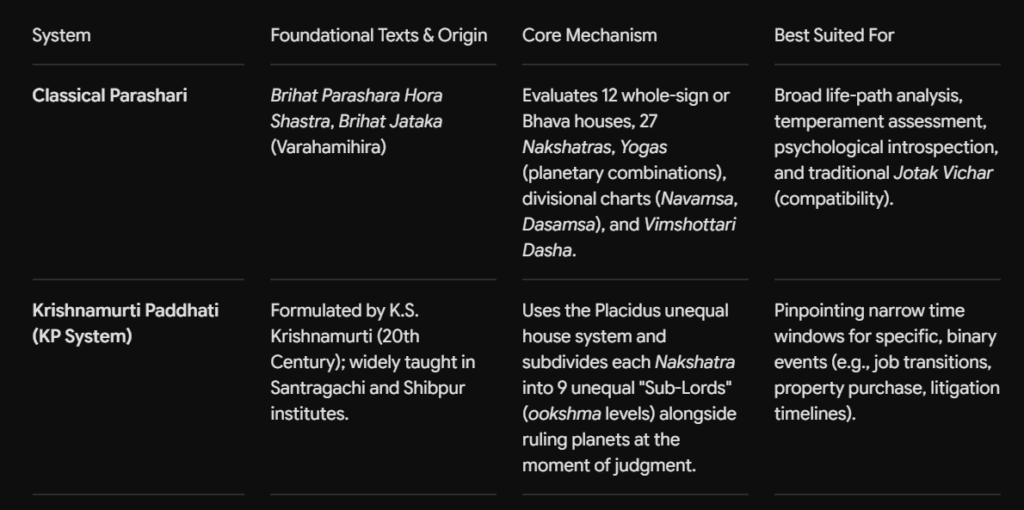
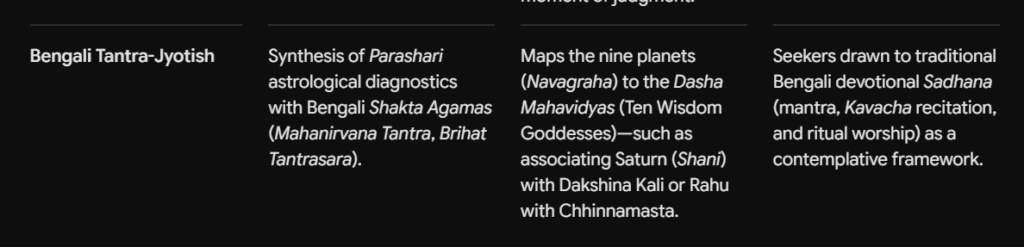
Astrologers across Shibpur, Kadamtala, and Santragachi generally operate within one of three frameworks:
Deconstructing Tantra, Vashikaran, and Aghori Claims in Howrah
Anyone searching online for the best astrologer in Howrah will encounter aggressive digital advertisements blending Jyotish with sensational claims of Tantra, Vashikaran, and Aghori powers. Separating historical South Asian theology from commercial manipulation is critical.
Shakta Tantra vs. Commercial Fear-Mongering
As religious studies scholars such as June McDaniel (Offering Flowers, Feeding Skulls) and Rachel Fell McDermott have documented, West Bengal’s Shakta Tantra is a complex liturgical and philosophical tradition centered on devotion (Bhakti) and meditative discipline (Sadhana). Within authentic Tantra-Jyotish—including heritage lineages operating in older Howrah neighborhoods like Dalalpukur and Shibpur—planetary remedies (Upayas) are designed to cultivate mental equipoise and spiritual resilience.
Commercial operators, however, frequently distort this heritage. If an astrologer claims your career or health struggles are caused by Baan Mara (lethal black magic) or a curse planted by a jealous relative, and demands ₹15,000 to ₹50,000 for a secret midnight puja at a cremation ground (Shmashana), you are witnessing psychological coercion, not traditional Tantra.
Vashikaran, Free Will, and the Ethics of Consent
Local directories and lead-generation portals in Howrah are heavily populated with self-styled “Vashikaran Specialists” promising to “get lost love back in 24 hours,” halt divorces, or control a spouse’s mind.
In classical Tantric compendiums such as Lakshmana Deshikendra’s Sharada Tilaka Tantra and the Dattatreya Tantra, Vashikaran (attraction or subjugation) is cataloged as one of the Shatkarma (six occult rites). However, primary texts explicitly classify the selfish or coercive use of such rites as Abhichara (malefic sorcery) and warn of severe ethical and karmic repercussions for both practitioner and client. For the modern seeker, two principles are paramount:
The Primacy of Consent: Any attempt to magically or psychologically coerce another person’s affection, marriage decision, or autonomy violates fundamental interpersonal ethics.Healthy relationships require mutual consent, communication, and counseling—not occult manipulation.
Consumer Fraud: No mantra or ritual can override human free will. Guarantees of “100% Vashikaran results” are predatory schemes targeting individuals experiencing acute grief, rejection, or marital trauma.
The “Online Aghori” Paradox
Several search results targeting Howrah micro-localities (such as Andul, Domjur, Bagnan, and Liluah) advertise “Online Aghori Babas” complete with WhatsApp booking funnels and GST registration numbers.
Historically and anthropologically, the Aghor tradition—tracing its modern institutional lineage to the 17th-century ascetic Baba Kina Ram in Varanasi and earlier Kapalika Shaiva currents—is a radical monastic path. Authentic Aghoris practice extreme renunciation to dissolve the conventional boundaries between purity and pollution, seeing the divine (Shiva/Shakti) in all phenomena. By definition, genuine Aghor ascetics do not run suburban commercial chambers, buy Google Ads, or sell relationship charms over the phone.
A Discerning Seeker’s Vetting Framework
Before scheduling a session with any practitioner claiming to be the best astrologer in Howrah, apply four objective filters.
- Auditing Credentials and Lineage
Astrological signage in Howrah frequently displays rows of impressive titles: Dr., Gold Medalist, Jyotish Samrat, Jyotish Mahamahopadhyaya, or Vidya Vachaspati.
The Reality of Titles: Under India’s University Grants Commission (UGC) regulations, state and central universities rarely award clinical doctorates in predictive astrology; academic Sanskrit departments award PhDs for historical, philological, or textual research into Jyotish Shastra. Most titles seen on Howrah signboards are honorary certificates conferred by private societies, weekend conferences, or non-governmental institutes (such as the Astrological Research Project in Kolkata or the Indian Council of Astrological Sciences).
What Actually Matters: Look past honorary medals. Ask where the practitioner learned mathematical astronomy (Ganita) and whether they belong to an identifiable teaching lineage (Parampara) or reputable instructional institute where charts are analyzed systematically.
- Unbundling Consultation from Gemstone (Ratna) Sales
The most pervasive ethical conflict in Bengal’s astrological market is the bundling of chart readings with retail gemstone (Ratna) and Rudraksha sales. Many commercial chambers around Howrah Junction, Gagananchal Market, and Dobson Road advertise low consultation fees (₹200 to ₹500) as a loss-leader. Once inside, the client is prescribed multiple expensive stones—such as Blue Sapphire (Neelam), Yellow Sapphire (Pukhraj), Red Coral (Pola), or Cat’s Eye (Chuni)—priced by the Ratti (carat weight) from the astrologer’s own display case.
Fact vs. Belief: Mineralogically and scientifically, gemstones have no empirical ability to alter human health, finances, or planetary gravity. Within the belief framework of Jyotish, gems are viewed as subtle symbolic resonators, and classical texts like Brihat Parashara Hora Shastra prioritize non-monetary remedies: Mantra (meditative chant), Dana (charitable giving), and behavioral discipline.
The Rule of Thumb: Never purchase a gemstone directly from the astrologer who diagnoses your chart, or from a shop where the astrologer receives a referral commission. An ethical consultant charges a transparent fee strictly for their analytical time.
- Spot-Checking Manufactured Fear (Kaal Sarp Dosh)
A reliable way to test an astrologer’s textual grounding is their attitude toward Kaal Sarp Dosh (when all seven planets sit hemmed between the lunar nodes Rahu and Ketu). Despite being the most heavily marketed affliction in modern Indian astrology, the term Kaal Sarp Dosh does not appear in Sage Parashara’s Brihat Parashara Hora Shastra or Varahamihira’s Brihat Jataka (which instead discuss Nabhasa Yogas like Sarpa Yoga under entirely different planetary rules). A scholarly astrologer in Howrah will contextualize nodal placements calmly rather than demanding thousands of rupees for fear-driven shanti pujas. - Legal and Medical Boundaries
Under India’s Drugs and Magic Remedies (Objectionable Advertisements) Act, 1954, advertising miraculous or astrological cures for medical and psychiatric conditions is a punishable offense. Furthermore, the Consumer Protection Act, 2019 penalizes misleading advertisements and unfair trade practices. An ethical practitioner in Howrah will explicitly tell you to seek licensed medical, psychiatric, or legal professionals for clinical or statutory problems, honoring the classical Indian balance between Daiva (cosmic timing/fate) and Purushartha (rational human effort).
Practical Consultation Guide for Howrah Residents
Questions to Ask Before Booking in Shibpur, Kadamtala, or Howrah Maidan
When calling a chamber or institute to book an appointment, ask three straightforward questions:
“What is the complete consultation fee, and does it cover a full verbal and written breakdown of the chart?” (Standard transparent fees in Howrah range from ₹500 to ₹2,000 per session depending on seniority and scope, with zero obligation to buy products.)
“Which astrological system and Panjika calculation does the Acharya use?” (Whether they use Parashari with Lahiri/Drik Siddhanta or Krishnamurti Paddhati, a serious practitioner will answer immediately and precisely.)
“Does the consultation rely on chart explanation rather than Remedial Pujas?” (Ensure the session focuses on explaining your Lagna [Ascendant], Mahadasha [planetary period], and practical decision-making.)
Navigating Jotak Vichar (Marriage Matching) Without Superstition
One of the most common reasons families in Howrah consult an astrologer is Jotak Vichar—comparing the horoscopes of prospective marriage partners. Traditionally, Bengali matchmakers evaluate the 36-point Ashtakoota system alongside planetary synastry and Kuja Dosha (Manglik Dosh, the placement of Mars in the 1st, 2nd, 4th, 7th, 8th, or 12th house).
In popular superstition, being Manglik is often framed as a fatal curse that threatens the life of the spouse unless complex rituals (like a symbolic marriage to a tree or clay pot) are performed. Classical Jyotish scholarship rejects this sensationalism. Traditional texts list dozens of astronomical exceptions (Kuja Dosha Bhanga) that neutralize Mars’s intensity, and serious practitioners interpret a strong Mars placement simply as an indicator of high assertive energy or fiery temperament that requires mutual patience and communication. When consulting an astrologer in Howrah for marriage matching, treat the reading as a conversation starter about emotional compatibility and shared values—never as a superstitious veto over two consenting adults’ informed commitment.